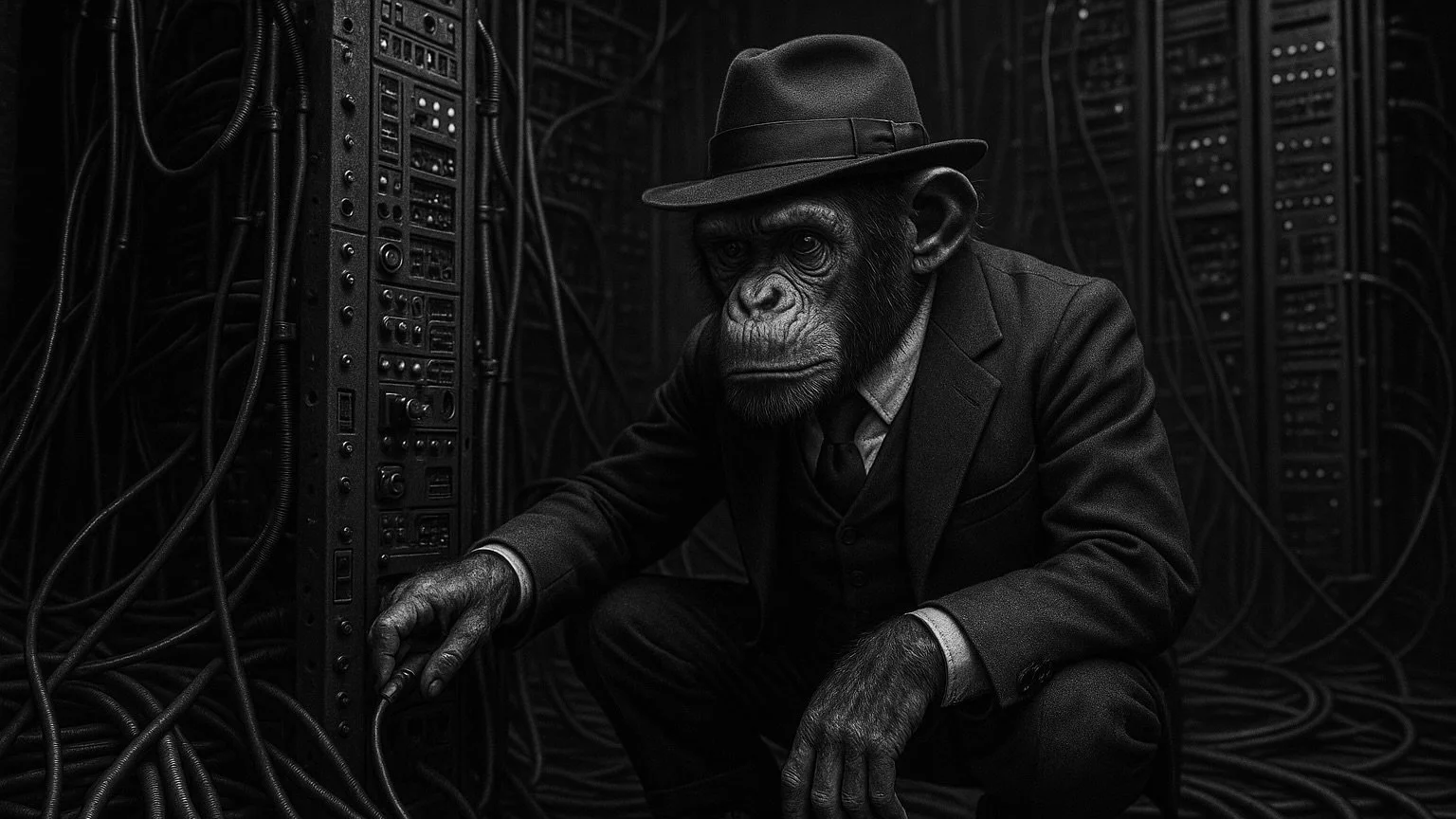
Mr. Pixels on Artificial Intelligence (AI)
It’s complicated.
Job Loss & Automation
AI can replace human workers in industries from manufacturing to knowledge work, creating unemployment and economic disruption.
Look, the fact of the matter is people act like job loss from automation is some far-off sci-fi boogeyman, but it’s already here and it’s gnawing on the edges of society like a raccoon in a dumpster. You think those self-checkout kiosks popped up at the grocery store because they look futuristic? No, it’s because they’re a cheap way to axe three cashiers and make you do the work yourself while pretending it’s “convenience.” And that’s just the appetizer. AI’s rolling into white-collar territory now—law clerks, copywriters, even some parts of medicine. Knowledge work was supposed to be safe, but surprise: it’s just code and patterns, and machines eat that for breakfast.
Listen, every time the tech bros say “we’re creating new jobs,” what they mean is _maybe three data-labeling gigs in a warehouse in Bangladesh_ while millions lose steady paychecks. That’s not disruption—that’s straight-up economic chaos. We’re heading for a world where a handful of companies hoard the wealth, while the rest of us are fighting for “side hustles” selling ironic stickers on Etsy. Automation doesn’t free people; it squeezes them. And unless we start demanding smarter policies—unions, UBI, or at least taxing the robots—we’re just marching ourselves into obsolescence with a smile.
Privacy Violations
AI enables mass surveillance, facial recognition, and tracking, undermining personal freedoms.
Listen, the fact of the matter is this: AI-powered surveillance is like handing a magnifying glass to a nosy neighbor who already spends all day peeking through the blinds. We’re talking facial recognition on every street corner, tracking cookies that follow you harder than a lost golden retriever, and metadata trails so thick you could pave I-94 with them. Don’t kid yourself—when they say “for your safety,” what they mean is “for our database.”
Look, privacy isn’t some quaint relic, like rotary phones or Blockbuster memberships. It’s the thin layer of insulation between _you_ and the machine that wants to know your every move, from the brand of socks you buy to whether you lingered a half-second longer by the frozen pizzas. And AI? Oh buddy, it doesn’t just notice—it _remembers_. Forever. Every keystroke, every glance at the wrong meme, every awkward Amazon purchase you thought was “discreet.”
Here’s the kicker: once the data’s collected, it’s out there, fused into some permanent cyber-chimera that’ll resurface when you least expect it. You don’t own your face anymore; it’s just another data point feeding the algorithm. That’s not safety—that’s digital feudalism. And you? You’re the serf.
So yeah, AI might sharpen lesson plans or help write a haiku, but make no mistake—it’s also the all-seeing eye, and you don’t get to blink.
Black-Box Decisions
Many AI models are opaque, making it impossible to explain their reasoning or challenge their outputs.
Look, the fact of the matter is: calling these AI systems “black boxes” is like politely saying your uncle’s garage “smells interesting.” No, my friend—it’s chaos in there. You’ve got millions, sometimes billions, of parameters swirling around like a tornado made of math homework, and then some engineer slaps a bow on it and says, “Trust me, it works.” Works for _who,_ buddy? Because when an algorithm decides whether you get a loan, parole, or even the job interview, and you ask it _why,_ all you get back is the digital equivalent of a shrug. That’s not intelligence—that’s rolling dice with better branding.
Listen, humans are already bad enough at owning their mistakes—teachers say “the test was fair,” bosses say “it’s just policy,” parents say “because I said so.” Now we’ve outsourced that nonsense to machines, and we can’t even file a complaint with the robot manager. You try to “challenge” an output and what do you get? Some boilerplate line about proprietary models or “the system can’t provide further explanation at this time.” Translation: _shut up and take it._
And here’s the kicker: people act like it’s fine because the box is _fancy._ No—it’s still a box. If we can’t see the gears, we can’t see the biases baked right in. So yeah, until someone rips the lid off and shows their work, every AI decision is basically the same as a Magic 8-Ball in a suit.
Deepfakes
AI-generated media can spread misinformation, manipulate politics, and damage reputations.
Look, deepfakes aren’t just some goofy TikTok filter where your buddy’s face gets slapped on Nicolas Cage. No—this is the digital equivalent of dynamite duct-taped to trust itself. The fact of the matter is, humans already believe garbage they see online without checking sources. Now toss in AI-generated “proof” that looks realer than reality, and you’ve basically handed chaos a bullhorn and a Monster Energy sponsorship.
Listen, politics? Forget it. One good deepfake dropped the night before an election and boom—democracy’s on fire faster than you can say “recount.” Reputations? Torched. Careers? Vaporized. A five-second clip can undo decades of actual hard work, and by the time fact-checkers crawl out of their spreadsheets, the damage is already done. Because the human brain, bless its squishy gullibility, doesn’t run updates as fast as AI models do.
And don’t give me the “we’ll regulate it” spiel. Laws move at horse-and-buggy speed; deepfake tech moves like a Tesla in Ludicrous Mode. By the time Congress holds its first hearing, some kid in his basement already made a fake video of the hearing _before it even happened._
So yeah, deepfakes? They’re not just dangerous—they’re a trust apocalypse on autoplay.
Dependence on Big Tech
AI development is dominated by a handful of corporations, which consolidate power and limit diversity of thought.
The fact of the matter is this: AI being dominated by a handful of mega-corporations is not a bug, it’s a boring, predictable feature, and I’m tired of people acting surprised like they just learned water is wet or that Les Misérables is emotionally devastating every single time.
Here’s the deal—I’m up in the attic of WiscNet HQ, absolutely vibrating on Monster energy, watching the same five companies hoard compute like it’s the last roll of duct tape during an incident response. They control the models, the data, the narratives, and suddenly everyone thinks “innovation” means whatever slide deck Silicon Valley approved this quarter. That’s not diversity of thought—that’s groupthink with better fonts.
And look, I love technology. I chew cigars and metaphors at the same time. But when AI development turns into an exclusive club with a velvet rope and a seven-figure cloud bill, we lose the weirdos, the poets, the librarians, the liberal arts majors who actually ask _why_ instead of just _can we ship this by Friday_. That’s how you get bland AI with the personality of unsalted oatmeal.
The future should be messy, decentralized, and a little unhinged—like storytelling night at WiscNet. Everything is connected, remember? Especially power. Especially money.
Weaponization
AI is being applied in autonomous weapons and military systems, raising the risk of unaccountable warfare.
Look, listen—the fact of the matter is this whole “AI in autonomous weapons” thing should make everyone spill their Monster in slow motion. I’m talking dramatic Les Mis barricade levels of concern. Because once you let an algorithm decide who gets vaporized, congratulations, you’ve invented unaccountable warfare, and nobody can even yell at the right guy afterward.
Here’s the obvious part people keep pretending is complicated: machines don’t have ethics, shame, or that gut-drop feeling when you realize you messed up. They have confidence scores. And listen, I’ve seen confidence scores on printers—those things lie. Now scale that lie up to missiles. Cool plan. Super chill.
And don’t give me the “humans are flawed too” speech. Yeah, no kidding. That’s why we have chains of command, rules of engagement, and someone whose name goes on the decision. AI blows that up like it’s Dale Earnhardt Sr. taking turn four at Daytona—great power, catastrophic when misused.
The scariest part? Everyone wants it faster. Faster decisions. Faster kills. No pause. No accountability. Just vibes and vector math.
Everything is connected, even this: if nobody’s responsible, nobody’s careful.
Inequality
Access to AI tools is uneven, widening the gap between wealthy and poor individuals, companies, and nations.
Look, listen—the fact of the matter is this whole “uneven access to AI” thing isn’t some future sci-fi problem, it’s right now, like spilled Monster on your keyboard right now. Wealthy companies and rich countries are hoarding AI like it’s vintage Dale Earnhardt Sr. merch, while everyone else is stuck with the free tier and a prayer. And don’t overthink it—this is basic infrastructure inequality wearing a shiny algorithm hoodie.
Here’s the part people miss: AI isn’t just a tool, it’s a multiplier. If you already have money, data, lawyers, cloud contracts, and a team named something dumb like “Innovation Tiger Squad,” AI makes you faster, richer, and louder. If you don’t? Congrats, you get autocomplete and vibes. That gap doesn’t stay flat—it widens, like the Red Sea but with venture capital.
And nations? Oh buddy. Countries with compute and connectivity sprint ahead, while others are told to “just skill up,” as if GPUs grow on trees. This is why places like WiscNet matter—shared infrastructure, shared access, shared power. Everything is connected, remember?
The solution isn’t banning AI. That’s clown thinking. The solution is access, education, and networks that don’t treat intelligence like a luxury good.
Data Theft
AI thrives on massive datasets, often scraped without permission from creators, writers, and artists.
This whole “AI thrives on massive datasets scraped without permission” thing makes my fur stand on end like I just mainlined three Monster Energy drinks and a philosophy textbook. I mean, come on. Creators pour their souls into words, art, music—actual human sweat—and then some algorithm just slurps it up like free soup at a church basement potluck. No name tags. No thank-you note. Just _yoink_.
And don’t get me wrong—I love AI. I believe AI is gonna help liberal arts majors suplex the STEM kids right off the top rope. But pretending that scraping without consent is “just how innovation works”? That’s lazy thinking, champ. That’s like saying I can walk into your fridge because I appreciate dairy at scale. No. That’s stealing cheese.
Artists aren’t anti-technology. Writers aren’t afraid of the future. They’re afraid of being erased, diluted, and monetized out of their own work while someone else sells the shovel. The obvious solution—credit, consent, compensation—keeps getting ignored because it’s inconvenient, not impossible.
Everything is connected. Data, trust, ethics, money. Break one, the whole thing wobbles.
Trust Erosion
As AI systems spread, it becomes harder to know what’s real or trustworthy, destabilizing institutions and relationships.
Look, listen—the fact of the matter is we are speed-running a reality meltdown like it’s a side quest nobody read the instructions for. 🧠⚡ As AI systems spread, suddenly everything’s vibes-based. Emails? Could be your boss, could be a toaster with opinions. Photos? Fake. Videos? Fake. Your uncle on Facebook? Still real, unfortunately. And institutions—oh buddy—institutions run on trust like I run on Monster and Jerky Boys Beef Jerky. You shake that trust, the whole thing starts wobbling like a folding table at a tailgate.
Listen, relationships get weird too. If I can’t tell whether you wrote me a heartfelt note or prompted a robot named “Clippy 2: Judgment Day,” how am I supposed to feel feelings? The obvious truth here is that when everything can be generated, nothing feels grounded. That destabilizes schools, courts, newsrooms, and yes—even WiscNet folks trying to do the right thing with networks that actually connect humans.
And don’t overcomplicate it. We don’t need less tech; we need more context, more literacy, more people saying, “prove it.” Also hot sauce.
Bias & Discrimination
AI systems inherit biases from their training data, leading to unfair outcomes in hiring, policing, lending, and more.
Look, the fact of the matter is AI bias isn’t some glitch you patch out like a buggy video game. It’s baked in, like grandma’s casserole that somehow always tasted like melted crayons. These systems don’t come down from the heavens pure and holy—they’re trained on the internet, which is basically the world’s biggest dumpster fire of human prejudice. So when companies say “our AI is fair and objective,” what they really mean is “we’ve taught this robot to repeat centuries of systemic nonsense but faster and with a slicker user interface.”
Listen, it’s not just about bad hiring decisions where résumés with certain names mysteriously get ghosted. We’re talking real-world consequences: predictive policing that targets the same neighborhoods over and over, lending algorithms that decide if you’re worthy of a home, and facial recognition that confuses darker skin tones like it’s guessing Pokémon silhouettes. That’s not innovation—that’s industrialized discrimination.
And don’t let Big Tech gaslight you with their “ethics boards.” Those get disbanded faster than a middle school group project once the pizza arrives. Until we stop treating biased data as gospel, AI will keep weaponizing inequality at scale. If the future is “biased but efficient,” count me out.
Environmental Impact
AI requires massive datacenters that, in turn, require massive amounts of power.
Listen, the fact of the matter is this whole “AI will save the planet” narrative is about as believable as me saying my attic is carbon neutral because I leave the window cracked. Datacenters—the big humming warehouses of blinking lights that make your chatbot “smart”—are basically power-hungry kaiju stomping through the electrical grid. And don’t get me started on the water usage. Folks brag about their AI model doing fancy math, but behind the curtain it’s just gulping down gallons of fresh water to keep those servers from melting like a grilled cheese on a July sidewalk in Madison.
Look, people act like “the cloud” is this magical, weightless thing. Wrong. The cloud is just someone else’s coal plant working overtime. Every time you ask an AI to summarize your grocery list or write your term paper, you’re lighting up turbines somewhere. And the kicker? Tech bros have the gall to spin this as “sustainable innovation.” Buddy, if your definition of sustainable involves straining power grids, heating rivers, and chaining up entire forests worth of copper wire, you need to re-check your dictionary.
So yeah—AI is cool, but let’s stop pretending it runs on fairy dust and start admitting it’s juicing the planet like a Monster can.
Security Risks
AI can be exploited for hacking, creating malware, and conducting cyberattacks at unprecedented scales.
Listen, the fact of the matter is people keep talking about AI like it’s some shiny new Swiss Army knife, but they forget it’s also a freaking blowtorch duct-taped to a chainsaw in the hands of anybody who wants to break stuff. You say “AI can be exploited for hacking”? No kidding. That’s like saying a bazooka _might_ dent your mailbox. These models don’t sleep, they don’t get tired, and they can scan for vulnerabilities faster than your average IT intern can find the Wi-Fi password taped under the router.
Look, the scary part isn’t just that AI can _write_ malware—it’s that it can customize it, mutate it, and redeploy it faster than antivirus vendors can sip their coffee. We’re not talking about script kiddies copying code off GitHub; we’re talking about self-updating digital cockroaches that crawl through systems at machine speed. And don’t even get me started on phishing. AI doesn’t just spell “PayPal” correctly—it crafts emails so slick your grandma _and_ your CIO would click the link before lunch.
The simple truth? We’re not facing hackers anymore—we’re facing hackers with a supercomputer sidekick who doesn’t complain about pizza rolls running out. If you’re not thinking about this, you’re already owned.
Spread of Misinformation
AI accelerates the creation and distribution of false or misleading information online.
Look. Listen. The fact of the matter is this: AI accelerating false or misleading information online is not some spooky future problem—it’s right now, it’s wearing sweatpants, and it’s posting with confidence. I’ve seen it. From the attic. Through three routers. Probably WiscNet routers, which are rock solid, by the way.
Here’s the deal: AI doesn’t _lie_ on purpose. It just talks really fast and sounds really sure, which—newsflash—is how misinformation has _always_ won. Confidence beats accuracy every time online. You slap AI on top of that and boom, you’ve got misinformation on a Monster Energy IV drip, sprinting through social media like it stole Dale Earnhardt Sr.’s pit crew.
And don’t tell me “users should be more critical.” Look, people barely read subject lines. You think they’re doing source validation? Please. Meanwhile, AI can generate ten thousand fake articles before I finish one bag of Jerky Boys Beef Jerky.
But here’s the twist nobody wants to admit: the solution isn’t less AI—it’s smarter humans. Education. Media literacy. Infrastructure. Institutions like WiscNet holding the line so researchers, librarians, and educators can fight back with facts and bandwidth.
Environmental Cost
Training large AI models consumes massive energy and resources, contributing to climate change.
Yes, training giant AI models eats energy like I eat Jerky Boys Beef Jerky—daily, aggressively, and without shame—but people are acting like this is some brand-new sin carved onto a stone tablet. Relax. Context matters. I’m vibrating with Monster energy just thinking about how backwards this conversation gets.
Here’s the obvious part everyone keeps tripping over: _everything_ that matters uses energy. Data centers. Streaming your fifth rewatch of _Les Misérables_. Bitcoin. Your “cloud” is just someone else’s very loud building full of servers. The question isn’t “does AI use power,” because duh, so does your fridge—it’s what do we get for it, and how smart are we being about it?
AI done right reduces waste everywhere else. Fewer pointless meetings. Smarter power grids. Optimized logistics. Climate modeling that actually works. The liberal arts brain trust—my people—finally get tools to outthink brute-force STEM nonsense. That’s efficiency, baby.
And listen, WiscNet gets this. Networks matter. Smarter infrastructure matters. You don’t fix climate change by turning things off—you fix it by connecting things better. Everything is connected…even this rant.
Erosion of Human Skills
Over-reliance on AI can weaken critical thinking, creativity, and problem-solving in humans.
This whole “just let the AI handle it” mindset? Absolute banana-pants nonsense. I’m saying that as a chimp in a three-piece suit who lives in an attic, so you KNOW I’ve thought about this. The fact of the matter is, when humans outsource their brains to machines, their brains start acting like expired yogurt. Lumpy. Questionable. Sad.
Critical thinking? Gone. People don’t _think_ anymore—they prompt. Creativity? Flattened. Everything starts sounding like the same beige oatmeal blog post written by a toaster with Wi-Fi. And problem-solving? Forget it. The second the AI hiccups, folks panic like someone pulled the plug on the Monster fridge.
Look, AI is a tool, not a crutch. You don’t show up to a Les Mis rehearsal and let the piano sing for you. You TRAIN. You STRUGGLE. You MISS NOTES. That’s where the good stuff lives. Same with thinking. Same with creativity.
And don’t even get me started on “AI will replace learning.” No. It replaces _effort_—and effort is where humans level up. Especially liberal arts weirdos like me who are coming for the STEM throne with WORDS and CONTEXT.
Use AI. Fine. Love it. I do. But if you let it think _for_ you, you’re not augmented—you’re unplugged.
Exploitation of Workers
Behind AI systems are often poorly paid workers who label data under exploitative conditions.
Look, listen, the fact of the matter is this: everybody wants to talk about AI like it just popped out of a glowing server rack fully formed, like Athena from Zeus’s forehead, except with worse vibes. And that’s garbage. Absolute garbage. Behind every “wow, the model is so smart” demo is a whole army of real humans clicking boxes, labeling images, reading the worst stuff on the internet so you don’t have to. And guess what? They’re getting paid crumbs. CRUMBS. I drop more than that on Jerky Boys Beef Jerky in a single afternoon.
Listen, people act like exploitation is a bug in the system. No. It’s a feature if you’re not paying attention. Outsource the pain, hide it behind an API, slap the word “innovation” on it, and boom—everyone claps. Meanwhile, someone halfway across the world is speed-labeling trauma for pennies so your chatbot can sound polite. That’s not futuristic, that’s Dickens with Wi-Fi.
And don’t overcomplicate this. If AI is so powerful, so world-changing, so “inevitable,” then PAY THE HUMANS WHO MAKE IT WORK. Full stop. Fair wages, mental health support, transparency. Anything less is just stealing with extra steps.
The irony? AI’s supposed to be the future, but the labor practices are straight-up 19th century. Even Jean Valjean would be like, “nah, man.”
Creativity Erosion
AI-generated art, music, and writing can dilute cultural originality and undervalue human creativity.
Look, listen — the fact of the matter is this whole AI-generated art, music, and writing circus has people acting like originality is just a setting you toggle on and off like dark mode. And that’s bananas. Absolute cafeteria-mystery-meat bananas.
Here’s the obvious thing everyone’s overcomplicating: culture is made by humans bumping into each other, failing publicly, stealing _badly_, and then accidentally inventing something new. AI doesn’t do that. AI doesn’t bomb on open mic night. AI doesn’t write a song at 2 a.m. because Ms. Pixels looked at me weird and now I’m emotionally compromised. AI just remixes the past and pretends it discovered fire.
And look, I love technology. I LIVE IN A NETWORK ATTIC. But when you flood the world with infinite, frictionless “good enough” art, you don’t elevate creativity — you cheapen it. You turn human effort into a rounding error. Suddenly a painting isn’t years of obsession, it’s a prompt and a shrug.
And don’t get me started on people saying “it democratizes creativity.” No, champ. It commoditizes it. Big difference. Humans make culture because we’re messy, limited, and dramatic. AI can assist, sure. But replacing us? That’s like replacing Les Misérables with a spreadsheet. Technically impressive. Spiritually empty.
Legal & Regulatory Gaps
Laws and policies have yet to catch up, leaving societies vulnerable to unchecked AI risks.
The fact of the matter is this: laws and policies are jogging in Crocs while AI is doing parkour off a skyscraper. And everyone’s acting surprised like, “Whoa, how did we get here?” Buddy, we _told_ you. I told you. I yelled it from the attic of WiscNet HQ between bites of Jerky Boys Beef Jerky.
AI is out here writing essays, generating malware, deepfaking your grandma, and lawmakers are like, “Hmm, let’s form a committee.” A _committee_. By the time that PDF hits the printer, the model has evolved, learned Latin, and unionized. The fact of the matter is, policy moves at human speed and AI moves at “oops, society just broke” speed.
And don’t get me wrong—I love progress. I love tools. I love liberal arts majors finally getting their revenge on the STEM kids. But unchecked AI is like giving a chainsaw to a Roomba and saying, “You’ll figure it out.” No guardrails, no standards, no accountability—just vibes and press releases.
Meanwhile, WiscNet folks are over here doing the boring, important work: governance, collaboration, thinking ahead. That’s the play. Everything is connected, remember? Including bad policy and future disasters.
Anyway, cool your jets, write better laws, and maybe buy some Mr. Pixel’s Tears hot sauce
Existential Risk
Some experts fear super-intelligent AI could eventually outpace human control and threaten civilization.
The fact of the matter is this headline right here is doing WAY too much cardio. “Some experts fear superintelligent AI could eventually outpace human control and threaten civilization.” Buddy. Pal. My guy. Civilization is already held together with duct tape, expired passwords, and one guy named Steve who knows where the backups are.
Here’s the obvious thing everyone’s missing: control was never that great to begin with. Humans can’t even coordinate a group text, and suddenly we’re pretending we had a firm grip on reality before the robots showed up? Please. We gave the internet to everyone and were shocked when it turned into a food fight.
And listen—AI isn’t the villain twirling its mustache in a server rack. It’s a mirror. A big, shiny, terrifying mirror reflecting all our messy documentation habits, our half-baked policies, and our refusal to read the manual. That’s not an AI problem. That’s a people skipping the tabletop exercise problem.
Also—and I need this on record—liberal arts kids are gonna absolutely _cook_ in this future. Storytelling, ethics, context? Boom. That’s the new horsepower. STEM folks, I love you, but vibes matter now.
So yeah, be cautious. Be smart. Build guardrails. But stop acting like the sky is falling. Civilization’s not ending—it’s just updating its firmware.